
There's nothing quite like waking up at 5:25 on a Saturday morning to watch football, and then witnessing a near brawl a few minutes past 6.
In the 31st minute of the Everton + Chelsea match on Saturday, João Pedro went down in the penalty area following a challenge from James Tarkowski. No penalty was awarded.
A minute later, Josh Acheampong received a yellow card for tripping Jack Grealish.
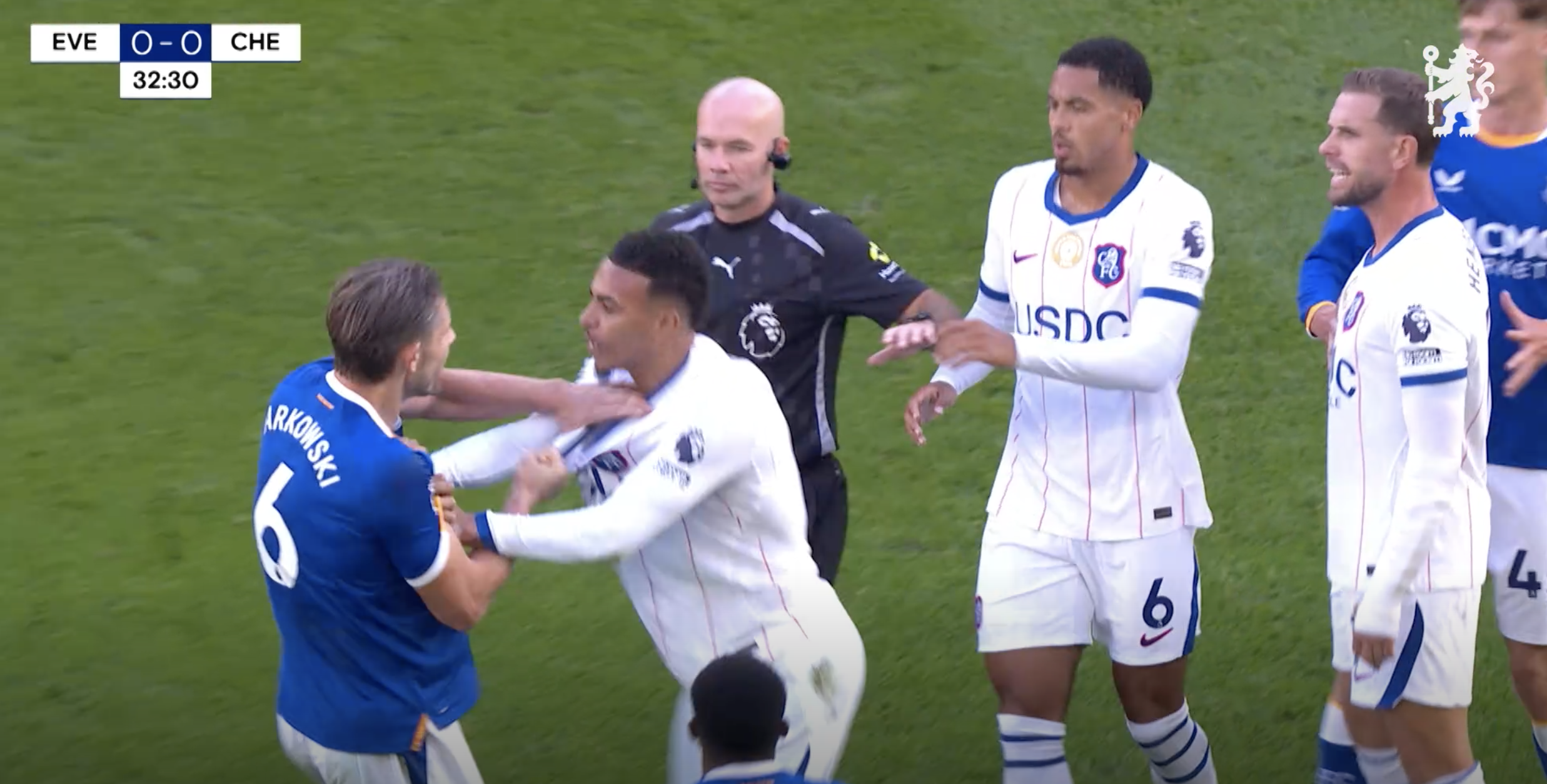
Seconds passed, and as the players lined up for an Everton free kick, Tarkowski and Moisés Caicedo grappled for position, practically embracing as they tried to gain the upper hand.
In the aftermath of the freekick, Tarkowski drove his shoulder into Caicedo, who was chasing the ball from the clearance several yards ahead of him. There was zero attempt to play the ball.
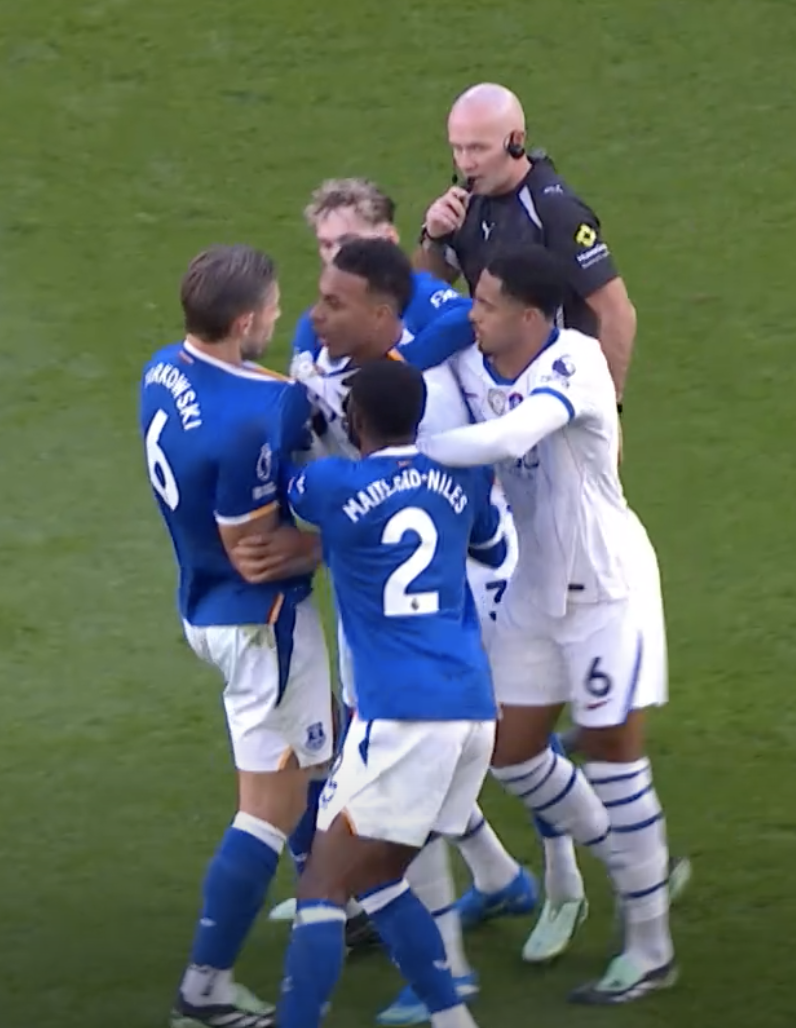
Players from both sides rushed in, and suddenly there was shoving, shirt-grabbing, and no shortage of men eager to involve themselves. Adding two more yellows to the game tally.
As the players were separated, one commentator suggested that Everton might welcome this kind of confrontation. They wanted to get under Chelsea's skin.
It was a remarkably contentious few minutes of football. By halftime, five yellow cards had been issued.
Everton were playing angry. And for a while, I wondered whether that was exactly what made them dangerous. They were spicy, aggressive, and seemingly comfortable with the hostility developing on the pitch.
But was this simply the natural temperament of a competitive match, or was Everton deliberately using aggression to unsettle Chelsea?
Anger is such an organic outcome of any competition. Particularly in football, where rivalries run deep, perceived injustices are endlessly debated, and the stakes can feel disproportionately personal. Across the Premier League, individual players, entire teams, and expansive fan communities can find themselves caught up in the same emotional current.
Some players are naturally combative. Others only reveal that side of themselves under particular circumstances. But when one player's frustration begins to influence another's, can anger become contagious? Can an entire team adopt a temperament that none of its players would necessarily bring to the pitch on their own?
When Everton returned after halftime, there was a new composure to their play. Or at least, that's how it appeared to me.
Perhaps it was fatigue, or the discouragement of conceding to Chelsea almost immediately after the restart. Or, had David Moyes delivered the antivirus at halftime, putting an end to whatever contagious aggression had taken hold of his players?
Whatever the cause, the "fire in their bellies," as the commentator put it, seemed to have faded.
I found myself wondering what would have happened if they'd kept playing with that same edge.
Could they have provoked a Chelsea player into a second yellow? Would they have sustained more pressure or created better opportunities? Or would they simply have been more interesting to watch?
Dare I ask even more questions…but, did Everton become more composed at the expense of becoming better footballers?

Sometimes, is a team less effective when they become more disciplined?
I think there's something to be said about the spirit of a match, particularly the energy that takes shape after kickoff. The starting eleven are finally on the pitch, the referee begins establishing their boundaries, and players start reacting to one another instinctively, each action provoking another.
Even with months of preparation, tactical instructions, and carefully considered lineups, there are things a manager cannot entirely anticipate.
I personally feel that an unexpected, collective personality emerges during certain matches. Players begin responding to one another in ways that create a particular rhythm or intensity. Confidence builds upon itself. Frustration becomes collective. Occasionally, anger appears to become an advantage that no one consciously chose.
Think of almost any underdog sports movie. A team is struggling, the inspirational captain digs deep, the players confront whatever has been holding them back, and suddenly something changes. When the final seconds stretch out impossibly long, their collective competitive edge becomes something greater than the sum of their individual abilities.
Of course, real football rarely follows such a convenient script. But the underlying idea interests me.
There are moments when a team seems to find something within itself that cannot be entirely attributed to skill, training, or strategic direction.
Is it pure grit? A feeling? A shared instinct? An emotional understanding that changes the way eleven people play together?
It's a spiritual tactic.

Troy Bolton turned his love for song into the emotional unifier his b-ball team needed.
Now, I am far from a professional athlete, but I am a feeler. I know anger can bring determination, clarity, or complete irrationality. Sometimes I wish I could tap into my past break-up-rage to motivate me again. I suspect footballers aren't entirely different.
But perhaps this spiritual tactic is only mysterious to those of us watching. Emotions can't always be forced, but perhaps some managers know how to cultivate them, recognizing when their team has found an emotional advantage and when to let it run its course.
Did David Moyes ask Everton to settle down at halftime? Did he want more discipline and less sass? And was that the right decision? Or was Chelsea simply better equipped to take control after the break?
Football history offers plenty of examples of teams whose collective temperament became inseparable from their identity.
Atlético Madrid, under Diego Simeone, embodied defiance, grit, and a willingness to suffer together. José Mourinho's Chelsea built a formidable identity around confidence, physicality, and an us-against-the-world mentality. Arsène Wenger's Arsenal, particularly at their most fluid, played with joy, creative freedom, and an extraordinary understanding between players.
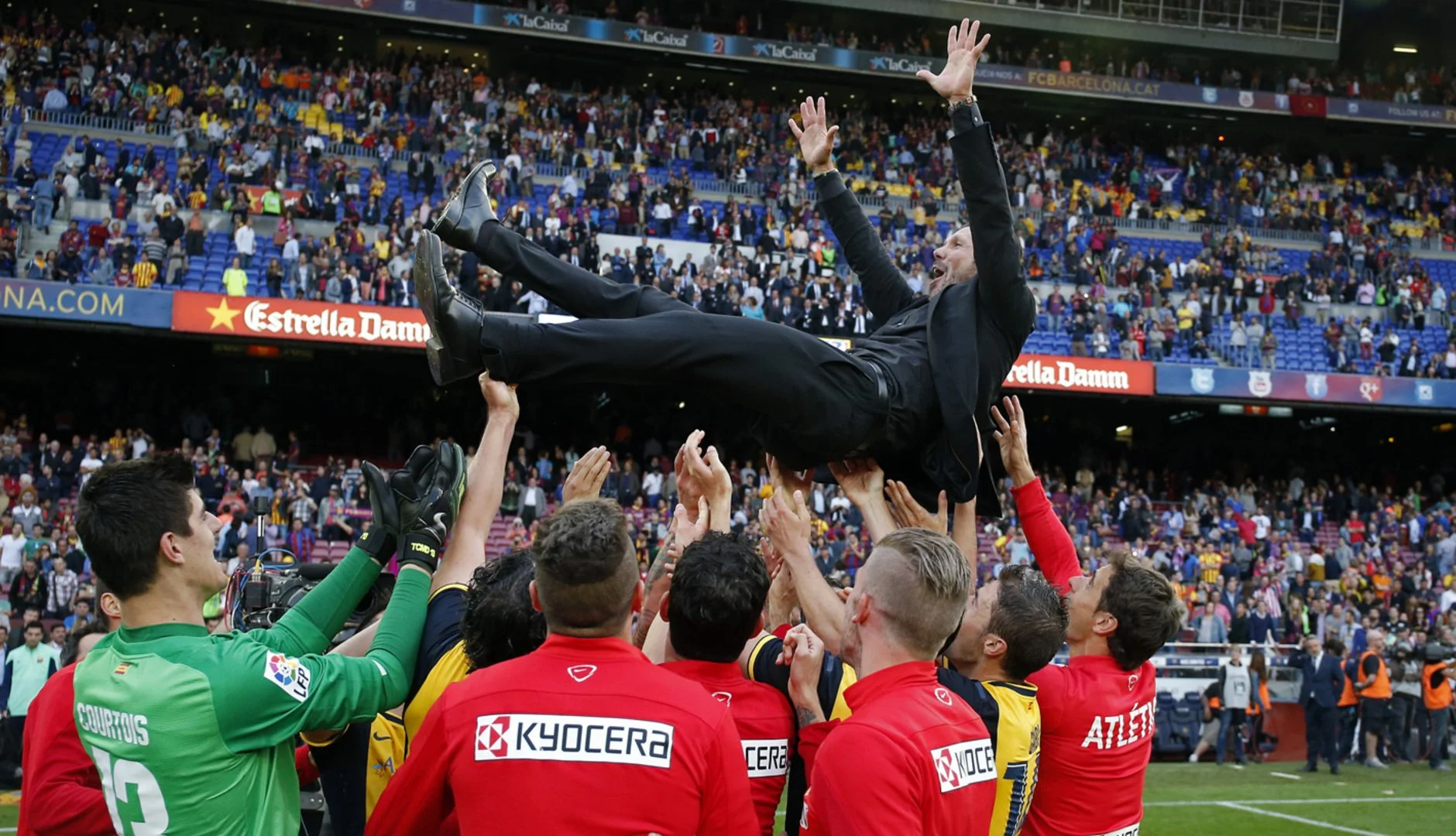
2013 Atlético Madrid / Simeone’s managerial influence fostered a collective energy that brought the team to the Champions League final and winners of the La Liga Title in ‘13/’14
These were very different teams, but each had a recognizable personality that extended beyond formations and individual talent.
Now I do not want us to get confused, a bad attitude isn't always productive. We’ve all seen aggression turn to rage, and continue on to multiple red cards and a farce of a match.
And I remember periods when Chelsea looked like shells of themselves. Goals were scarce, confidence was visibly depleted, and even the occasional celebration seemed subdued. Watching a team play without belief can be just as revealing as watching one consumed by aggression.
Whether it's anger, confidence, or melancholy, sometimes it seems that a shared emotion is what tethers eleven players together.

Temperament has always been part of football. Whether it can be controlled, cultivated, or weaponized, I have yet to determine.
All I know is that I'll be keeping an eye out for spiritual tactics from here on out.
S.B.
